Article
Research
Empatia
General
“A Room Somewhere Safe Is Better Than My Home Under Fire”

Daryna Yakymova is an art historian from Kyiv who has spent years researching twentieth-century and contemporary art at the National Art Museum of Ukraine. In October 2022, she fled to the Netherlands with her two daughters, then aged 9 and 1, and lived in Rotterdam for eight months. In the summer of 2023, she returned to Ukraine to reunite with her husband and mother and resume her museum work.
Now, as missile and drone attacks intensify and another winter approaches, Daryna is considering leaving again. But finding safety abroad is no longer as straightforward as it was in 2022. Her story reflects a growing reality for displaced Ukrainians: returning home does not necessarily mean the end of displacement.
“I was professionally unfulfilled. I needed to work.”

Photo: Daryna with her children in The Netherlands in 2022.
You first left Kyiv for the Netherlands in October 2022. What led you to make that decision?
Daryna Yakymova: In October 2022, we began experiencing severe missile attacks that partially destroyed our energy infrastructure. We had no electricity, and it was frightening because the attacks were both stressful and dangerous.
A friend of mine lives in the Netherlands with her partner, who is originally from Dnipro but has lived in Rotterdam for many years. When the full-scale war began, he had rented an apartment for some friends who came to the Netherlands. By October, they had found other accommodation, so the apartment became available.
My friend suggested that I come and stay there for a while, giving myself and my children an opportunity to rest. Of course, I agreed. I had only visited the Netherlands once before, on a museum trip to Amsterdam with my colleagues. This time, we stayed for eight months.
How was your experience of settling in the Netherlands?
Daryna Yakymova: Obtaining temporary protection was very straightforward. In my experience, the system in the Netherlands worked very well. Communication was excellent, both by email and in person. The municipality helped with the paperwork, and I had someone who stayed in contact with me, including when I had questions about my children's schooling.Everything was clear and relatively simple.

Photo: Daryna's daughter.
But there was another side to the experience. I was alone with my children, and I was not working. I was exclusively occupied with taking care of them.I began to feel what I would call professional hunger. I needed to work. I needed to do something meaningful with my professional life. In Rotterdam, I felt that my skills were not needed.
“I wanted to return to my work and rebuild a normal life.”
What made you decide to return to Kyiv in the summer of 2023?
Daryna Yakymova: There were several reasons. My mother was in Kyiv, my husband was in Ukraine, and we had been separated for a long time. I wanted us to be together again. I wanted to return to my museum work and rebuild a normal life.
The security situation in Kyiv also seemed manageable at that point. The city was not experiencing the same intensity of bombardment that we are experiencing now. When the school summer holidays began, I deregistered from the Rotterdam municipality, withdrew my children from school, closed all our affairs, and returned to Kyiv. We resumed our ordinary lives.
For me, Kyiv is home. I was born here, I live here, and my whole life is connected to this city. When I return to Kyiv, I am returning to my own life.
Looking back at your decision to leave in 2022, how has your perspective changed since then?
Daryna Yakymova: Not in the same way I think about it now. In 2022, when I left, I was focused on getting back to work and continuing my professional life. I was not following every development in the security situation as closely as I do today. There were attacks, of course, but they were secondary to my immediate concerns.
Now I experience attacks every day. I have become so exhausted by them that I understand I need a break. I need to protect my children and put their safety first.
Professional fulfillment will not disappear. I can return to my profession later. But safety is the priority now.
“It has become difficult simply to exist.”
How has daily life in Kyiv changed since you returned?
Daryna Yakymova: It has become extremely difficult simply to exist.
Warfare is also a technological race. As new weapons are developed, civilians become the people against whom they are used. Around six months ago, jet-powered Shahed drones began to be used intensively against Kyiv, and this changed what it means to live here.
You go to bed without knowing whether you will be able to sleep. You put your children to bed, and then the air-raid alerts begin. You hear the sirens outside, followed by explosions and drones. Then there are ballistic missile alerts, which are particularly frightening.
When a ballistic missile threat is announced, you have literally about three minutes to get out of bed and reach the corridor. You need to protect yourself from the glass that can shatter and fly through the room during an explosion.
There is often no time to reach a shelter. You have to react immediately and get away from the windows.
When a large-scale attack is announced, we know that missiles and drones could be approaching from several directions. Up to 30 ballistic missiles may be heading towards the city. Some may not be intercepted, as, in my view, the supply of air defence systems capable of intercepting ballistic missiles is unfortunately insufficient to protect our cities adequately.
These missiles can strike residential buildings, as happens all too often, or target energy infrastructure, logistics facilities, transport hubs and other critical sites. We know how to prepare for an attack like this. My children and I gather what we need—blankets, pillows and sleeping bags—and go to the shelter at their school, about 300 metres from our home. We stay there until morning.
But when there is a sudden ballistic threat without time to prepare, it is like playing roulette.
How does this affect your daughters' everyday lives?
Daryna Yakymova: Children are frightened, of course. They spend hours in shelters instead of learning or playing normally.
In the morning, if there is an air-raid alert, you cannot simply take your child to kindergarten. The children have to remain somewhere safe until the alert ends. An alert can last three, four or even six hours.
At kindergarten, children of different ages are crowded into the same shelter — from the youngest nursery groups to the older children. It is difficult for them. The rooms become stuffy, the ventilation is not always adequate, and the children are tired and stressed. When explosions happen, they are frightened, and their parents are not there to comfort them. My younger daughter attends an inclusive kindergarten, which also has children with additional needs. For them, these circumstances can be even harder.
When I am at work and know that my child has already spent three hours in a shelter, I stop thinking about my work. I think about how quickly I can get to her, take her home, and help her calm down and rest.
There is no normal school life, no normal kindergarten routine, and increasingly, no normal working life either.

Photo: Daryna's daughter.
What is it like to continue working at the National Art Museum under these conditions?
Daryna Yakymova: In May, a missile struck near our museum, and the blast wave shattered every single window in the nineteenth-century building. The walls and facades were also damaged.

Photo: National Art Museum after the bombings in May.
Now many of our windows are covered with plywood. As winter approaches, the rooms are becoming cold and damp, and working conditions are increasingly difficult.
When the electricity goes out, almost nothing works. We have EcoFlow portable power stations that we use to keep the security alarms running. When we organise public events, we connect the equipment to power the event space. We are trying to continue our work under circumstances that are far from normal.

Photo: National Art Museum after the bombings in May.
But even while I am at the museum, I cannot stop worrying about my children. On the way to work, you see clouds left by intercepted drones or the locations where drones have struck. You see what is happening around you, and you carry that fear with you throughout the day.
Recently, we went two full days without electricity after an attack on the energy infrastructure. The heating season had not even begun, and we were already dealing with scheduled and emergency power cuts. It is exhausting. Sleep deprivation and constant fear do not make it easy to work well or maintain a sense of stability.
“I need to protect my children and put their safety first.”
At what point did you begin seriously considering leaving Ukraine again?
Daryna Yakymova: When jet-powered Shahed drones appeared. I began thinking that perhaps we needed to leave somewhere.
Initially, I considered moving to western Ukraine. We had even spent the summer in Cherkasy region. But now we are seeing attacks intensify in western Ukraine as well. The waves of attacks that Kyiv experienced throughout the summer and autumn are affecting other regions too.
Staying in Kyiv has become dangerous because of the ballistic missiles and Shahed drones. I am completely exhausted by the constant anxiety and lack of sleep. I think I have reached a point where I need to take a break from this. I need to make my children safe. I am no longer looking at the situation primarily through the lens of my professional life. I am looking at it as a mother who needs to protect her children.
Why are you considering returning to the Netherlands?
Daryna Yakymova: I have been looking at different possibilities because remaining here is dangerous. The Netherlands is one of the options I have considered, partly because I previously lived there under temporary protection.
But the housing crisis is a major obstacle.
I have written to different Dutch municipalities. They respond promptly, and I appreciate that. I have not yet encountered a municipality that simply failed to answer me. They explain that I can come and that they will discuss my situation with me, but they also say that the accommodation places under their jurisdiction are completely full.
There are waiting lists of people who have not been able to find housing.
I have not contacted every municipality in the Netherlands, so I cannot speak for the entire country. But from the responses I have received, it is clear that finding somewhere to live is a huge problem.
What would happen if you arrived in the Netherlands now?
Daryna Yakymova: That is precisely the question I cannot yet answer.
My first question is whether I can come at all. There is a difference between being able to enter a country and knowing where you will live once you arrive.
I have looked into private rentals at relatively reasonable prices, but I cannot simply rent an apartment. I do not work in the Netherlands, I have no Dutch income, and I am not currently living there. In these circumstances, it is very difficult to find a landlord who will rent to me.
It becomes a vicious circle. To find work, I need to be there and establish myself. But to establish myself, I first need somewhere to live.
The details of renewing or obtaining temporary protection would also need to be clarified. I have not reached that stage yet because the immediate question is housing. The apartment where we lived in Rotterdam is no longer an option. When I left, the rental contract eventually ended, and other people moved in.
So I am trying to understand what possibilities remain.
“People think Ukrainians are returning permanently. I don't think that is correct.”
There is a lot of discussion about Ukrainians returning home. What do you think people in host countries should understand about this?
Daryna Yakymova: I do not think it is correct to assume that Ukrainians have started returning permanently and will now remain in Ukraine.
On the contrary, I think many people may try to leave again because the situation is becoming so difficult. Winter is approaching, and the energy infrastructure is damaged. We are already experiencing prolonged power cuts, and heating has not even begun.
I am not sure that European countries will see fewer Ukrainians arriving. I think they may face another wave of people trying to leave, particularly families with children.
This is why it is important to understand that returning to Ukraine does not necessarily mean that someone has decided to stay there forever. Circumstances change. What was manageable two years ago may no longer be manageable today.
People make decisions based on the situation they face at a particular moment. If that situation changes, they have to reconsider their options.
What would you like the Netherlands and other European countries to do differently for Ukrainians seeking protection?
Daryna Yakymova: I think there should be a much stronger focus on integrating Ukrainians into the labour market.
Ukrainians are adaptable. They can learn languages, acquire new skills, and adapt to different professional environments. Many have higher education and professional experience. They are doctors, researchers, academics and specialists.
Yet I have seen highly qualified Ukrainians who cannot find work that reflects their education and experience. I know of people with doctoral degrees and advanced medical qualifications who have struggled to find employment in Rotterdam. These are people whose skills could be valuable to the country where they live. Instead, their qualifications and experience are often underused.
When I lived in Rotterdam, I did not even have to learn Dutch if I did not want to. I could choose to study the language, attend courses and learn alongside my child, but there was no immediate requirement to do so. I think language learning should be encouraged much more actively. People should have the opportunity to reach a certain level of the language so that they can develop professionally and participate in the labour market.
It would be beneficial for the economy, and it would also help Ukrainians feel that they are contributing rather than simply waiting for their situation to be resolved.
We are not people who arrive without education, skills or professional experience. We are people with qualifications, knowledge and the capacity to adapt. I think host countries should make much greater efforts to recognise that and help us put our skills to use.
Beyond employment, what kind of support do displaced Ukrainians need?
Daryna Yakymova: Housing is the immediate issue. You need somewhere to live before you can begin rebuilding your life.
And I do not think this problem is unique to the Netherlands. The housing crisis affects many European countries, and it creates enormous difficulties for people who have to leave their homes.
In Ukraine, too, people are struggling to find somewhere safe to go. Volunteers and civil society organisations often provide psychological support, help internally displaced people find accommodation, or search for houses where families can stay. Much of this work depends on people helping one another.
For people from regions close to the front line, leaving can be difficult simply because they have nowhere to go and no money to live on elsewhere.
These are very human problems, and they need solutions that take people's actual circumstances into account.
“A room somewhere safe is better than my home under fire.”
When you think about leaving again, what would make the biggest difference to you and your daughters?
Daryna Yakymova: Honestly, a room somewhere safe for me and my children — any kind of accommodation where we could live without constant fear — would be many times better than my apartment in Kyiv.
My apartment has several rooms. It is my home, the place I love, the place that belongs to me and is connected to my whole life.
But it is under constant bombardment.
A room somewhere safe, with light and heating, would be far better for us right now than the home I love but where we cannot feel secure.
I never imagined that I would have to make this kind of comparison. But this is the reality I am facing.
Is there anything else you would like people in Europe to understand about Ukrainians who may need to leave again?
Daryna Yakymova: I would like people to understand that our decisions are not simple. We are not necessarily returning because the war is over or because we believe that life in Ukraine has become safe. We return because we have families, homes, jobs and lives there. We try to rebuild those lives whenever the circumstances allow us to do so.
But there comes a point when the danger becomes too great, especially when you have children.
I love Kyiv. I want to work at my museum. I want my children to have a normal childhood. I want us to be able to sleep at night, go to school, go to work and live without constant fear.
At the moment, I cannot guarantee those things for my children here.
I do not know exactly what will happen next. I can only follow the situation and make decisions based on what is safest for my family.
For now, safety has to come first.
_______________________________________________________________________________
Daryna's experience illustrates the uncertainty faced by Ukrainians whose displacement does not follow a single, linear path from fleeing to returning home. OPORA Foundation's research report, Navigating Return: Understanding the Challenges and Well-Being of Ukrainians Coming Home Amid Conflict, examines these changing mobility patterns and the pressures that shape people's decisions to return to Ukraine or seek protection abroad again.
For some families, returning home is an attempt to reunite with loved ones and reclaim their professional and personal lives. When security conditions deteriorate, however, the need to leave may return — while housing shortages and barriers to employment make finding safety abroad difficult.
Daryna's story brings this contradiction into focus: a person can have a home, a profession and a life to return to, yet still need somewhere else to be safe.
Daryna Yakymova is an art historian from Kyiv who has spent years researching twentieth-century and contemporary art at the National Art Museum of Ukraine. In October 2022, she fled to the Netherlands with her two daughters, then aged 9 and 1, and lived in Rotterdam for eight months. In the summer of 2023, she returned to Ukraine to reunite with her husband and mother and resume her museum work.
Now, as missile and drone attacks intensify and another winter approaches, Daryna is considering leaving again. But finding safety abroad is no longer as straightforward as it was in 2022. Her story reflects a growing reality for displaced Ukrainians: returning home does not necessarily mean the end of displacement.
“I was professionally unfulfilled. I needed to work.”
Photo: Daryna with her children in The Netherlands in 2022.
You first left Kyiv for the Netherlands in October 2022. What led you to make that decision?
Daryna Yakymova: In October 2022, we began experiencing severe missile attacks that partially destroyed our energy infrastructure. We had no electricity, and it was frightening because the attacks were both stressful and dangerous.
A friend of mine lives in the Netherlands with her partner, who is originally from Dnipro but has lived in Rotterdam for many years. When the full-scale war began, he had rented an apartment for some friends who came to the Netherlands. By October, they had found other accommodation, so the apartment became available.
My friend suggested that I come and stay there for a while, giving myself and my children an opportunity to rest. Of course, I agreed. I had only visited the Netherlands once before, on a museum trip to Amsterdam with my colleagues. This time, we stayed for eight months.
How was your experience of settling in the Netherlands?
Daryna Yakymova: Obtaining temporary protection was very straightforward. In my experience, the system in the Netherlands worked very well. Communication was excellent, both by email and in person. The municipality helped with the paperwork, and I had someone who stayed in contact with me, including when I had questions about my children's schooling.Everything was clear and relatively simple.
Photo: Daryna's daughter.
But there was another side to the experience. I was alone with my children, and I was not working. I was exclusively occupied with taking care of them.I began to feel what I would call professional hunger. I needed to work. I needed to do something meaningful with my professional life. In Rotterdam, I felt that my skills were not needed.
“I wanted to return to my work and rebuild a normal life.”
What made you decide to return to Kyiv in the summer of 2023?
Daryna Yakymova: There were several reasons. My mother was in Kyiv, my husband was in Ukraine, and we had been separated for a long time. I wanted us to be together again. I wanted to return to my museum work and rebuild a normal life.
The security situation in Kyiv also seemed manageable at that point. The city was not experiencing the same intensity of bombardment that we are experiencing now. When the school summer holidays began, I deregistered from the Rotterdam municipality, withdrew my children from school, closed all our affairs, and returned to Kyiv. We resumed our ordinary lives.
For me, Kyiv is home. I was born here, I live here, and my whole life is connected to this city. When I return to Kyiv, I am returning to my own life.
Looking back at your decision to leave in 2022, how has your perspective changed since then?
Daryna Yakymova: Not in the same way I think about it now. In 2022, when I left, I was focused on getting back to work and continuing my professional life. I was not following every development in the security situation as closely as I do today. There were attacks, of course, but they were secondary to my immediate concerns.
Now I experience attacks every day. I have become so exhausted by them that I understand I need a break. I need to protect my children and put their safety first.
Professional fulfillment will not disappear. I can return to my profession later. But safety is the priority now.
“It has become difficult simply to exist.”
How has daily life in Kyiv changed since you returned?
Daryna Yakymova: It has become extremely difficult simply to exist.
Warfare is also a technological race. As new weapons are developed, civilians become the people against whom they are used. Around six months ago, jet-powered Shahed drones began to be used intensively against Kyiv, and this changed what it means to live here.
You go to bed without knowing whether you will be able to sleep. You put your children to bed, and then the air-raid alerts begin. You hear the sirens outside, followed by explosions and drones. Then there are ballistic missile alerts, which are particularly frightening.
When a ballistic missile threat is announced, you have literally about three minutes to get out of bed and reach the corridor. You need to protect yourself from the glass that can shatter and fly through the room during an explosion.
There is often no time to reach a shelter. You have to react immediately and get away from the windows.
When a large-scale attack is announced, we know that missiles and drones could be approaching from several directions. Up to 30 ballistic missiles may be heading towards the city. Some may not be intercepted, as, in my view, the supply of air defence systems capable of intercepting ballistic missiles is unfortunately insufficient to protect our cities adequately.
These missiles can strike residential buildings, as happens all too often, or target energy infrastructure, logistics facilities, transport hubs and other critical sites. We know how to prepare for an attack like this. My children and I gather what we need—blankets, pillows and sleeping bags—and go to the shelter at their school, about 300 metres from our home. We stay there until morning.
But when there is a sudden ballistic threat without time to prepare, it is like playing roulette.
How does this affect your daughters' everyday lives?
Daryna Yakymova: Children are frightened, of course. They spend hours in shelters instead of learning or playing normally.
In the morning, if there is an air-raid alert, you cannot simply take your child to kindergarten. The children have to remain somewhere safe until the alert ends. An alert can last three, four or even six hours.
At kindergarten, children of different ages are crowded into the same shelter — from the youngest nursery groups to the older children. It is difficult for them. The rooms become stuffy, the ventilation is not always adequate, and the children are tired and stressed. When explosions happen, they are frightened, and their parents are not there to comfort them. My younger daughter attends an inclusive kindergarten, which also has children with additional needs. For them, these circumstances can be even harder.
When I am at work and know that my child has already spent three hours in a shelter, I stop thinking about my work. I think about how quickly I can get to her, take her home, and help her calm down and rest.
There is no normal school life, no normal kindergarten routine, and increasingly, no normal working life either.
Photo: Daryna's daughter.
What is it like to continue working at the National Art Museum under these conditions?
Daryna Yakymova: In May, a missile struck near our museum, and the blast wave shattered every single window in the nineteenth-century building. The walls and facades were also damaged.
Photo: National Art Museum after the bombings in May.
Now many of our windows are covered with plywood. As winter approaches, the rooms are becoming cold and damp, and working conditions are increasingly difficult.
When the electricity goes out, almost nothing works. We have EcoFlow portable power stations that we use to keep the security alarms running. When we organise public events, we connect the equipment to power the event space. We are trying to continue our work under circumstances that are far from normal.
Photo: National Art Museum after the bombings in May.
But even while I am at the museum, I cannot stop worrying about my children. On the way to work, you see clouds left by intercepted drones or the locations where drones have struck. You see what is happening around you, and you carry that fear with you throughout the day.
Recently, we went two full days without electricity after an attack on the energy infrastructure. The heating season had not even begun, and we were already dealing with scheduled and emergency power cuts. It is exhausting. Sleep deprivation and constant fear do not make it easy to work well or maintain a sense of stability.
“I need to protect my children and put their safety first.”
At what point did you begin seriously considering leaving Ukraine again?
Daryna Yakymova: When jet-powered Shahed drones appeared. I began thinking that perhaps we needed to leave somewhere.
Initially, I considered moving to western Ukraine. We had even spent the summer in Cherkasy region. But now we are seeing attacks intensify in western Ukraine as well. The waves of attacks that Kyiv experienced throughout the summer and autumn are affecting other regions too.
Staying in Kyiv has become dangerous because of the ballistic missiles and Shahed drones. I am completely exhausted by the constant anxiety and lack of sleep. I think I have reached a point where I need to take a break from this. I need to make my children safe. I am no longer looking at the situation primarily through the lens of my professional life. I am looking at it as a mother who needs to protect her children.
Why are you considering returning to the Netherlands?
Daryna Yakymova: I have been looking at different possibilities because remaining here is dangerous. The Netherlands is one of the options I have considered, partly because I previously lived there under temporary protection.
But the housing crisis is a major obstacle.
I have written to different Dutch municipalities. They respond promptly, and I appreciate that. I have not yet encountered a municipality that simply failed to answer me. They explain that I can come and that they will discuss my situation with me, but they also say that the accommodation places under their jurisdiction are completely full.
There are waiting lists of people who have not been able to find housing.
I have not contacted every municipality in the Netherlands, so I cannot speak for the entire country. But from the responses I have received, it is clear that finding somewhere to live is a huge problem.
What would happen if you arrived in the Netherlands now?
Daryna Yakymova: That is precisely the question I cannot yet answer.
My first question is whether I can come at all. There is a difference between being able to enter a country and knowing where you will live once you arrive.
I have looked into private rentals at relatively reasonable prices, but I cannot simply rent an apartment. I do not work in the Netherlands, I have no Dutch income, and I am not currently living there. In these circumstances, it is very difficult to find a landlord who will rent to me.
It becomes a vicious circle. To find work, I need to be there and establish myself. But to establish myself, I first need somewhere to live.
The details of renewing or obtaining temporary protection would also need to be clarified. I have not reached that stage yet because the immediate question is housing. The apartment where we lived in Rotterdam is no longer an option. When I left, the rental contract eventually ended, and other people moved in.
So I am trying to understand what possibilities remain.
“People think Ukrainians are returning permanently. I don't think that is correct.”
There is a lot of discussion about Ukrainians returning home. What do you think people in host countries should understand about this?
Daryna Yakymova: I do not think it is correct to assume that Ukrainians have started returning permanently and will now remain in Ukraine.
On the contrary, I think many people may try to leave again because the situation is becoming so difficult. Winter is approaching, and the energy infrastructure is damaged. We are already experiencing prolonged power cuts, and heating has not even begun.
I am not sure that European countries will see fewer Ukrainians arriving. I think they may face another wave of people trying to leave, particularly families with children.
This is why it is important to understand that returning to Ukraine does not necessarily mean that someone has decided to stay there forever. Circumstances change. What was manageable two years ago may no longer be manageable today.
People make decisions based on the situation they face at a particular moment. If that situation changes, they have to reconsider their options.
What would you like the Netherlands and other European countries to do differently for Ukrainians seeking protection?
Daryna Yakymova: I think there should be a much stronger focus on integrating Ukrainians into the labour market.
Ukrainians are adaptable. They can learn languages, acquire new skills, and adapt to different professional environments. Many have higher education and professional experience. They are doctors, researchers, academics and specialists.
Yet I have seen highly qualified Ukrainians who cannot find work that reflects their education and experience. I know of people with doctoral degrees and advanced medical qualifications who have struggled to find employment in Rotterdam. These are people whose skills could be valuable to the country where they live. Instead, their qualifications and experience are often underused.
When I lived in Rotterdam, I did not even have to learn Dutch if I did not want to. I could choose to study the language, attend courses and learn alongside my child, but there was no immediate requirement to do so. I think language learning should be encouraged much more actively. People should have the opportunity to reach a certain level of the language so that they can develop professionally and participate in the labour market.
It would be beneficial for the economy, and it would also help Ukrainians feel that they are contributing rather than simply waiting for their situation to be resolved.
We are not people who arrive without education, skills or professional experience. We are people with qualifications, knowledge and the capacity to adapt. I think host countries should make much greater efforts to recognise that and help us put our skills to use.
Beyond employment, what kind of support do displaced Ukrainians need?
Daryna Yakymova: Housing is the immediate issue. You need somewhere to live before you can begin rebuilding your life.
And I do not think this problem is unique to the Netherlands. The housing crisis affects many European countries, and it creates enormous difficulties for people who have to leave their homes.
In Ukraine, too, people are struggling to find somewhere safe to go. Volunteers and civil society organisations often provide psychological support, help internally displaced people find accommodation, or search for houses where families can stay. Much of this work depends on people helping one another.
For people from regions close to the front line, leaving can be difficult simply because they have nowhere to go and no money to live on elsewhere.
These are very human problems, and they need solutions that take people's actual circumstances into account.
“A room somewhere safe is better than my home under fire.”
When you think about leaving again, what would make the biggest difference to you and your daughters?
Daryna Yakymova: Honestly, a room somewhere safe for me and my children — any kind of accommodation where we could live without constant fear — would be many times better than my apartment in Kyiv.
My apartment has several rooms. It is my home, the place I love, the place that belongs to me and is connected to my whole life.
But it is under constant bombardment.
A room somewhere safe, with light and heating, would be far better for us right now than the home I love but where we cannot feel secure.
I never imagined that I would have to make this kind of comparison. But this is the reality I am facing.
Is there anything else you would like people in Europe to understand about Ukrainians who may need to leave again?
Daryna Yakymova: I would like people to understand that our decisions are not simple. We are not necessarily returning because the war is over or because we believe that life in Ukraine has become safe. We return because we have families, homes, jobs and lives there. We try to rebuild those lives whenever the circumstances allow us to do so.
But there comes a point when the danger becomes too great, especially when you have children.
I love Kyiv. I want to work at my museum. I want my children to have a normal childhood. I want us to be able to sleep at night, go to school, go to work and live without constant fear.
At the moment, I cannot guarantee those things for my children here.
I do not know exactly what will happen next. I can only follow the situation and make decisions based on what is safest for my family.
For now, safety has to come first.
_______________________________________________________________________________
Daryna's experience illustrates the uncertainty faced by Ukrainians whose displacement does not follow a single, linear path from fleeing to returning home. OPORA Foundation's research report, Navigating Return: Understanding the Challenges and Well-Being of Ukrainians Coming Home Amid Conflict, examines these changing mobility patterns and the pressures that shape people's decisions to return to Ukraine or seek protection abroad again.
For some families, returning home is an attempt to reunite with loved ones and reclaim their professional and personal lives. When security conditions deteriorate, however, the need to leave may return — while housing shortages and barriers to employment make finding safety abroad difficult.
Daryna's story brings this contradiction into focus: a person can have a home, a profession and a life to return to, yet still need somewhere else to be safe.
Stay informed with
our latest news
Subscribe to receive regular updates on our latest evidence-based research, insights, and policy recommendations.
By clicking Subscribe you're confirming that you agree with our Terms and Conditions.
Stay informed with
our latest news
Subscribe to receive regular updates on our latest evidence-based research, insights, and policy recommendations.
By clicking Subscribe you're confirming that you agree with our Terms and Conditions.
Stay informed with our latest news
Subscribe to receive regular updates on our latest evidence-based research, insights, and policy recommendations.
By clicking Subscribe you're confirming that you agree with our Terms and Conditions.

OPORA
Communication team
Related articles

Nederlands
Article
General
Research
Empatia
“Een kamer op een veilige plek is beter dan een huis onder vuur”
Oct 28, 2026

General
Article
“I Realised That My Experience Has Value”: Bogdana Postrygan’s Civil Society HUB Journey
Oct 28, 2026
Research
General
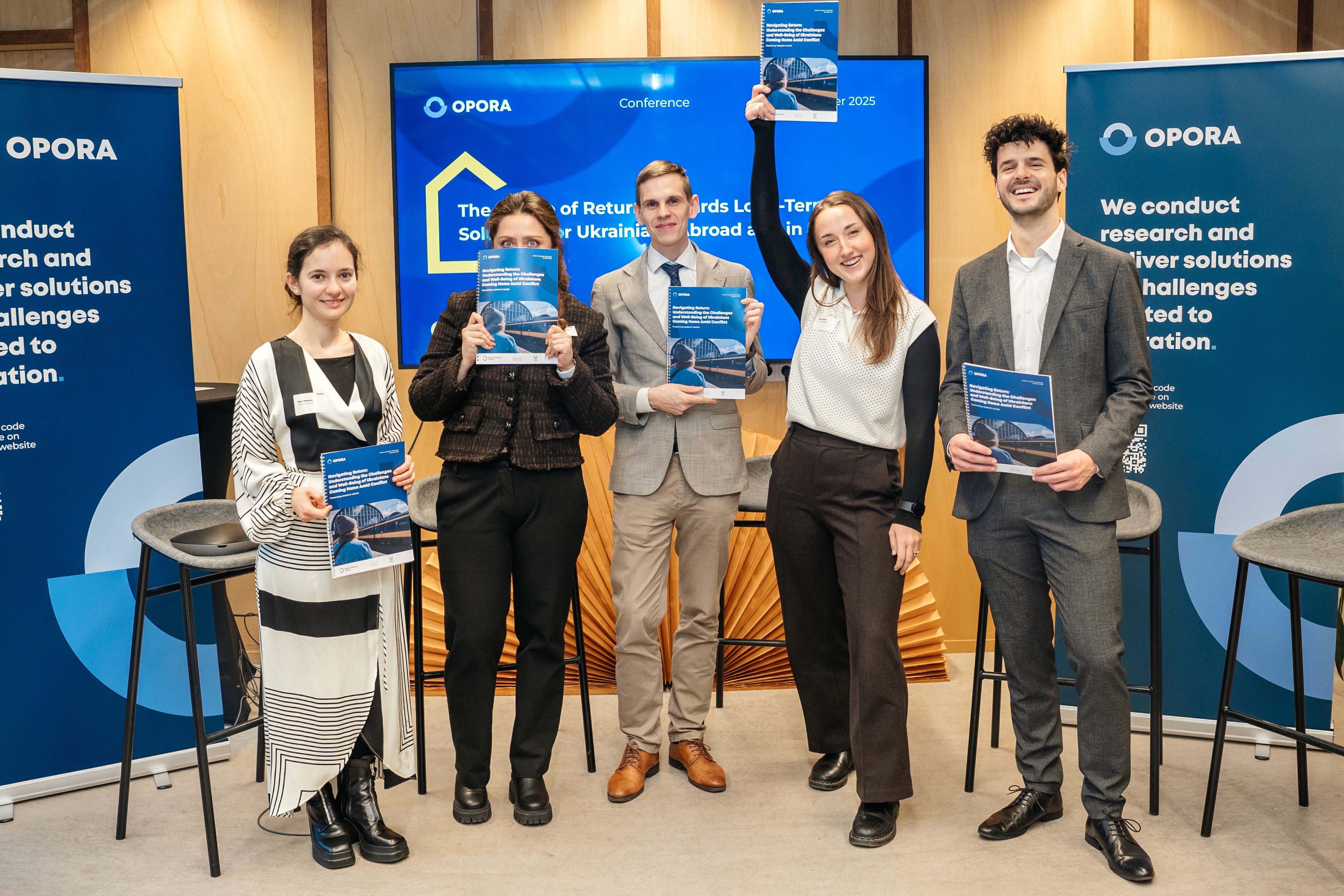
Navigating Return: First Public Presentation of Our Study
Oct 28, 2026
Research
Article
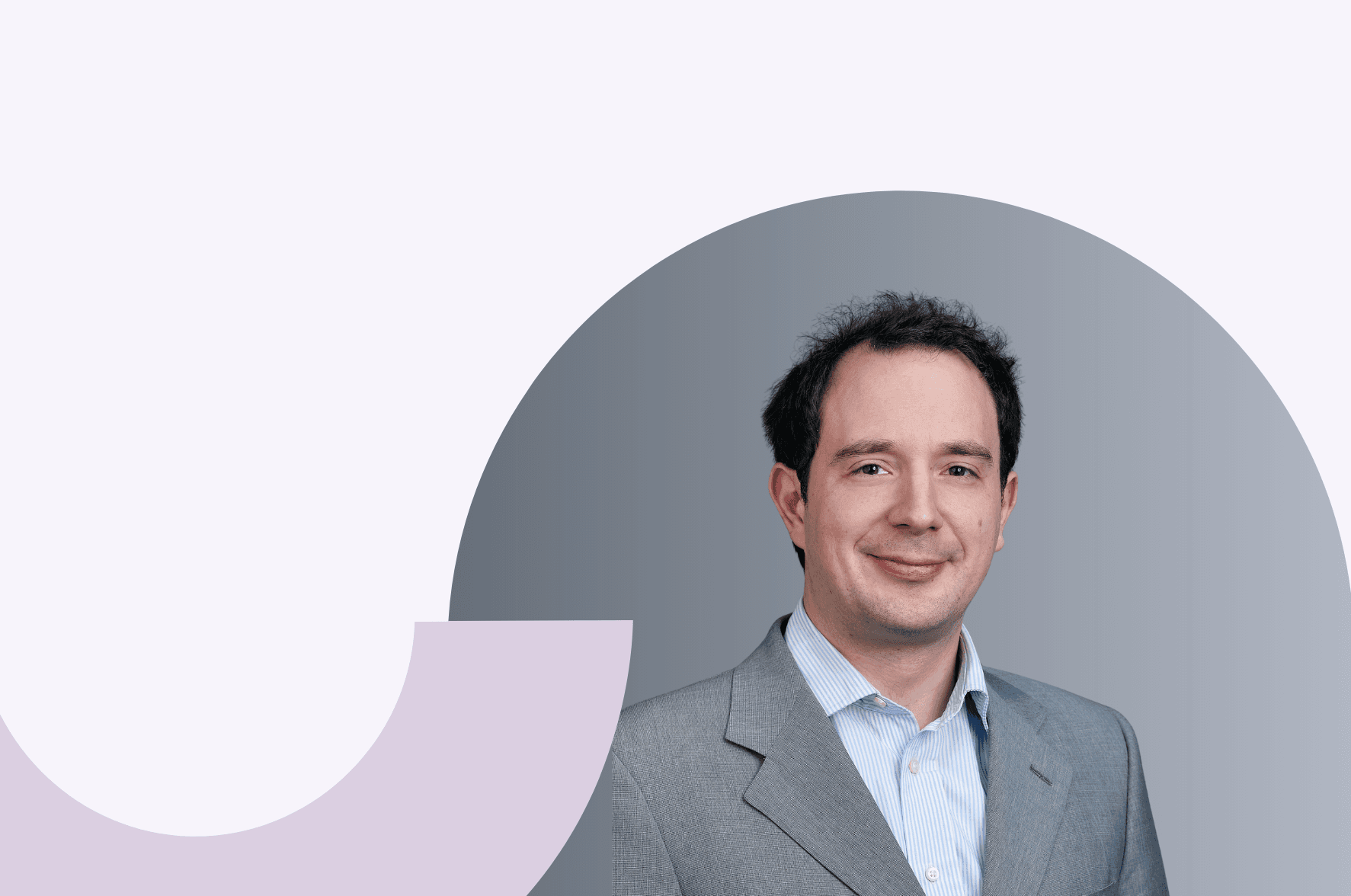
Hiring displaced people is not a risk. - Francesco Taiariol
Oct 28, 2026
People of OPORA
Legal