Research
General
Navigating Return: First Public Presentation of Our Study
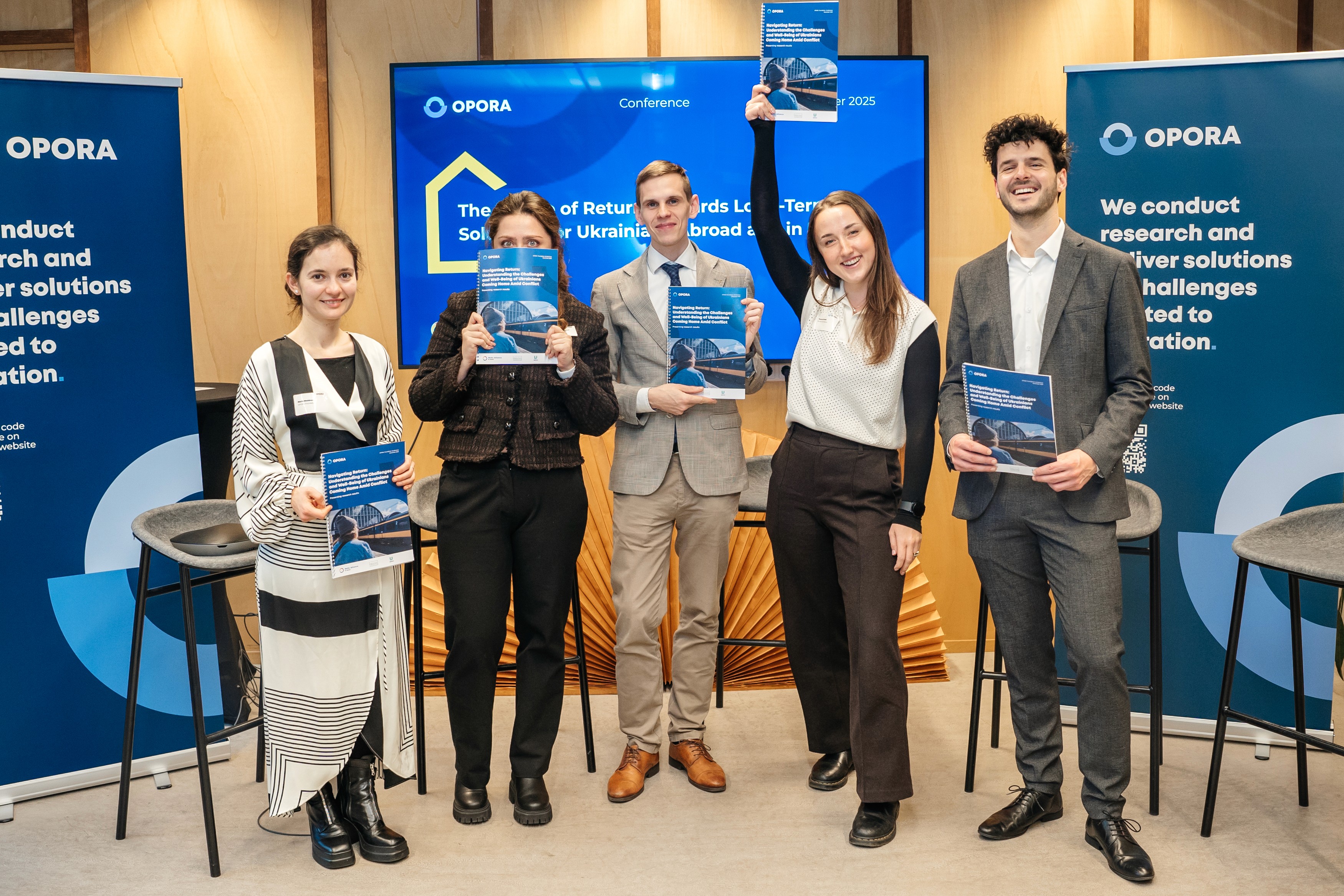
On December 4, in The Hague, we held the conference The Future of Return: Towards Long-Term Solutions for Ukrainians Abroad and in Ukraine. This marked the first public presentation of our Navigating Return study, offering unprecedented insight into Ukrainians who lived under Temporary Protection in the EU and then returned to Ukraine during active war.
Key Messages:
Nearly 60% of returnees care for children or elderly relatives. Interviews show that many returned because children struggled abroad or because aging parents in Ukraine had no alternative support.
Returnees frequently report being pushed back to Ukraine due to declining support in Europe, including: loss of temporary housing together with rising living costs, particularly rent.
Mental well-being is fragile, especially among recent returnees: Recent returnees report the lowest levels of well-being and the highest consideration to leave again, indicating risk of secondary displacement.
No region of Ukraine is fully safe. Speakers emphasized that missile attacks reach regions once considered “secure,” while front-line areas remain unstable. These conditions complicate reintegration and make wartime return exceptionally challenging.
As Alla Krasovska (Charitable Foundation "Rokada") highlighted, returnees often receive assistance only once reclassified as internally displaced persons (IDPs). This means support arrives after people have already reached a point of crisis, rather than preventing it.
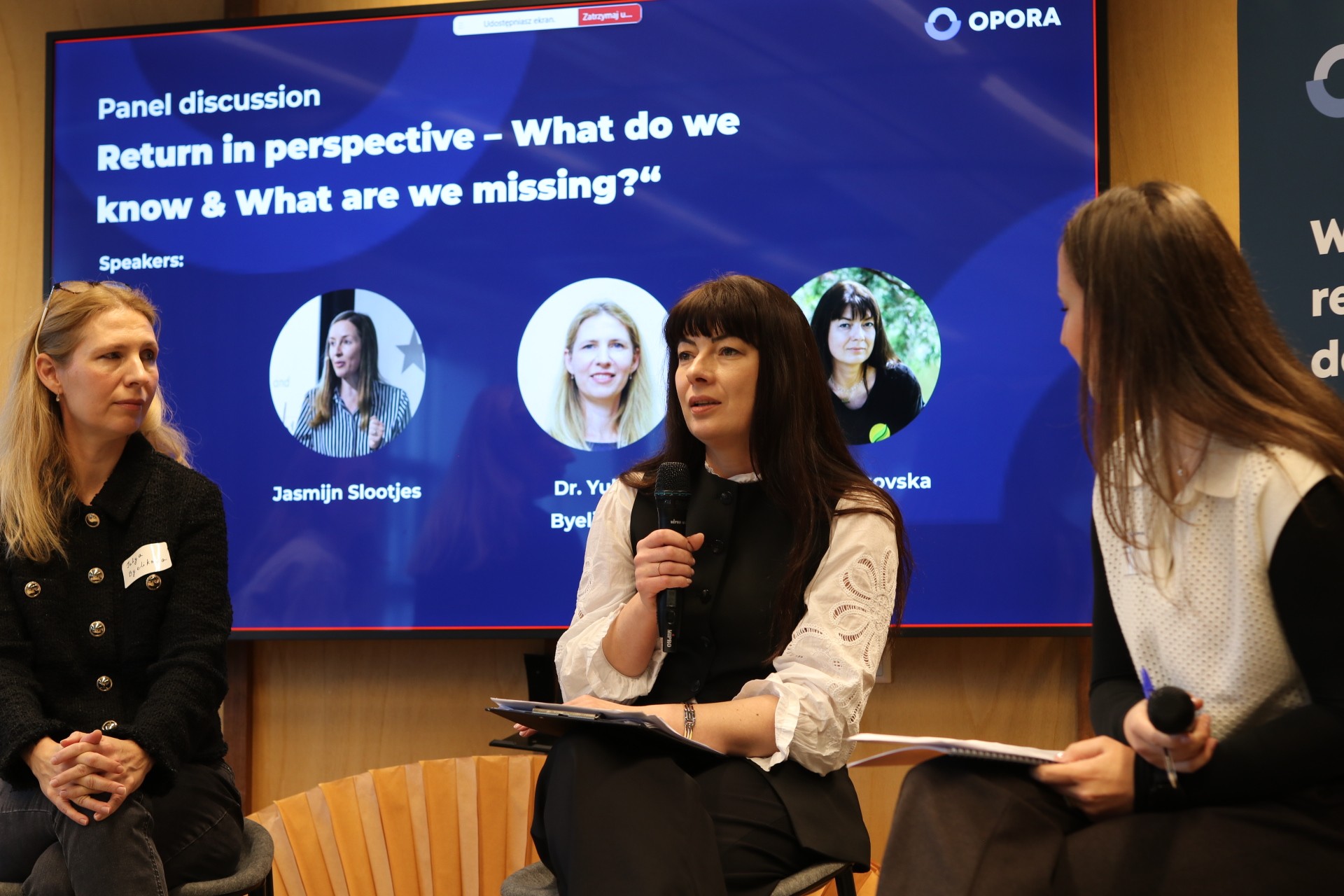
Implications for policy: Speakers underscored the need for adaptive policies that acknowledge wartime uncertainty and provide people with choices—not a binary of “return or stay.” Without stronger policy frameworks and more support structures in Ukraine, returnees remain at high risk of insecurity, downward mobility, and secondary displacement.
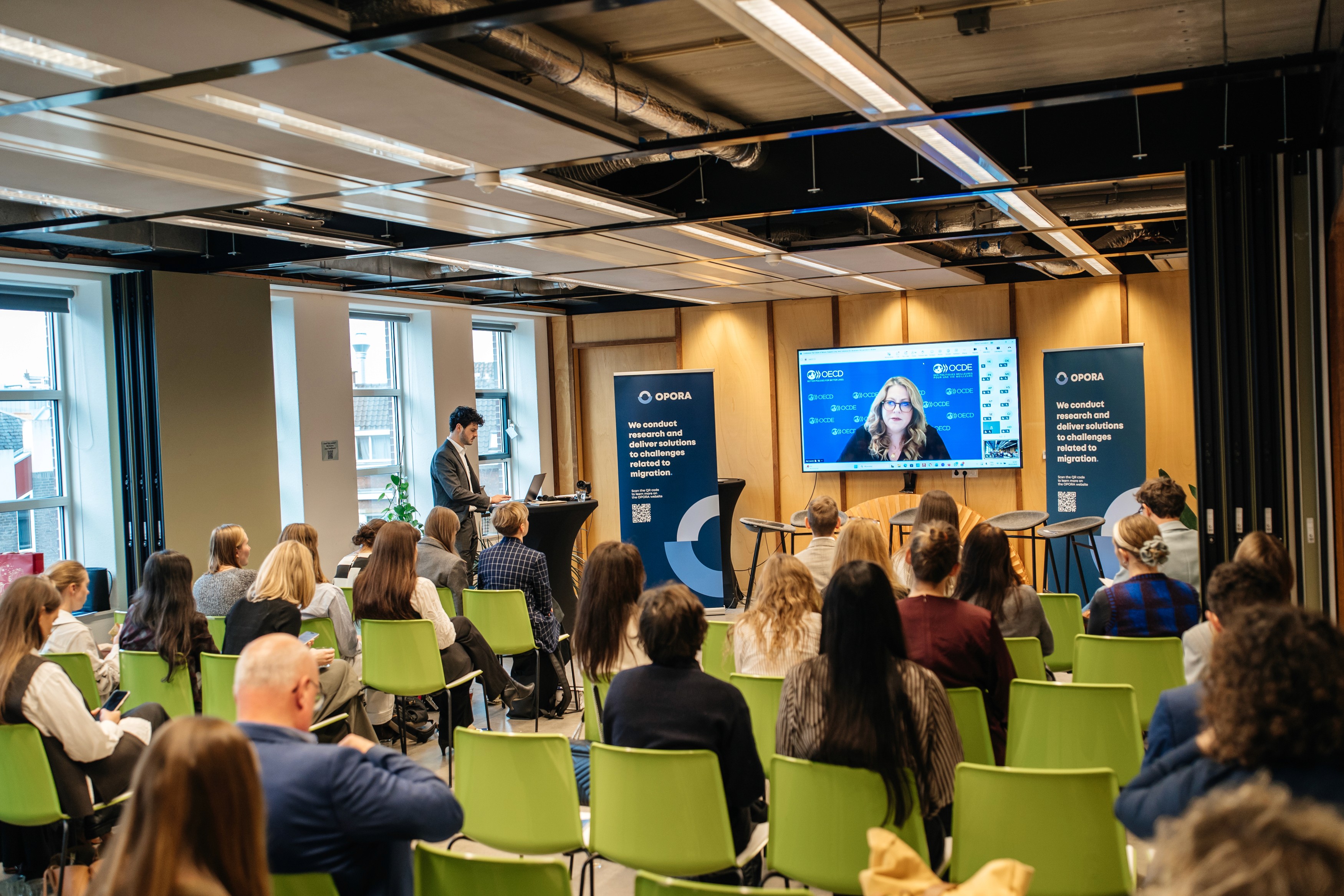
Our research team — Mateusz M. Krawczyk, Tetyana Kozak, Daria Delawar-Kasmai, and Yoram Kremers — together with OPORA CEO Maria Shaidrova, presented the findings, moderated panel discussions, and led the event. Special thanks to our speakers Martin Wagner, Erik Klaver, Karen Geertsema, Ave Lauren, Jasmijn Slootjes, Yuliya Byelikova, and Alla Krasovska, and to our partners Upinion and Laguna Collective.
📄 𝘛𝘩𝘦 𝘧𝘶𝘭𝘭 𝘳𝘦𝘴𝘦𝘢𝘳𝘤𝘩 𝘳𝘦𝘱𝘰𝘳𝘵 𝘸𝘪𝘭𝘭 𝘣𝘦 𝘱𝘶𝘣𝘭𝘪𝘴𝘩𝘦𝘥 𝘰𝘯 𝘰𝘶𝘳 𝘸𝘦𝘣𝘴𝘪𝘵𝘦 𝘪𝘯 𝘑𝘢𝘯𝘶𝘢𝘳𝘺 2026.
Photos by Lera Manzovitova.
On December 4, in The Hague, we held the conference The Future of Return: Towards Long-Term Solutions for Ukrainians Abroad and in Ukraine. This marked the first public presentation of our Navigating Return study, offering unprecedented insight into Ukrainians who lived under Temporary Protection in the EU and then returned to Ukraine during active war.
Key Messages:
Nearly 60% of returnees care for children or elderly relatives. Interviews show that many returned because children struggled abroad or because aging parents in Ukraine had no alternative support.
Returnees frequently report being pushed back to Ukraine due to declining support in Europe, including: loss of temporary housing together with rising living costs, particularly rent.
Mental well-being is fragile, especially among recent returnees: Recent returnees report the lowest levels of well-being and the highest consideration to leave again, indicating risk of secondary displacement.
No region of Ukraine is fully safe. Speakers emphasized that missile attacks reach regions once considered “secure,” while front-line areas remain unstable. These conditions complicate reintegration and make wartime return exceptionally challenging.
As Alla Krasovska (Charitable Foundation "Rokada") highlighted, returnees often receive assistance only once reclassified as internally displaced persons (IDPs). This means support arrives after people have already reached a point of crisis, rather than preventing it.
Implications for policy: Speakers underscored the need for adaptive policies that acknowledge wartime uncertainty and provide people with choices—not a binary of “return or stay.” Without stronger policy frameworks and more support structures in Ukraine, returnees remain at high risk of insecurity, downward mobility, and secondary displacement.
Our research team — Mateusz M. Krawczyk, Tetyana Kozak, Daria Delawar-Kasmai, and Yoram Kremers — together with OPORA CEO Maria Shaidrova, presented the findings, moderated panel discussions, and led the event. Special thanks to our speakers Martin Wagner, Erik Klaver, Karen Geertsema, Ave Lauren, Jasmijn Slootjes, Yuliya Byelikova, and Alla Krasovska, and to our partners Upinion and Laguna Collective.
📄 𝘛𝘩𝘦 𝘧𝘶𝘭𝘭 𝘳𝘦𝘴𝘦𝘢𝘳𝘤𝘩 𝘳𝘦𝘱𝘰𝘳𝘵 𝘸𝘪𝘭𝘭 𝘣𝘦 𝘱𝘶𝘣𝘭𝘪𝘴𝘩𝘦𝘥 𝘰𝘯 𝘰𝘶𝘳 𝘸𝘦𝘣𝘴𝘪𝘵𝘦 𝘪𝘯 𝘑𝘢𝘯𝘶𝘢𝘳𝘺 2026.
Photos by Lera Manzovitova.
Stay informed with
our latest news
Subscribe to receive regular updates on our latest evidence-based research, insights, and policy recommendations.
By clicking Subscribe you're confirming that you agree with our Terms and Conditions.
Stay informed with
our latest news
Subscribe to receive regular updates on our latest evidence-based research, insights, and policy recommendations.
By clicking Subscribe you're confirming that you agree with our Terms and Conditions.
Stay informed with our latest news
Subscribe to receive regular updates on our latest evidence-based research, insights, and policy recommendations.
By clicking Subscribe you're confirming that you agree with our Terms and Conditions.

OPORA
Communication team