General
Article
“I Realised That My Experience Has Value”: Bogdana Postrygan’s Civil Society HUB Journey

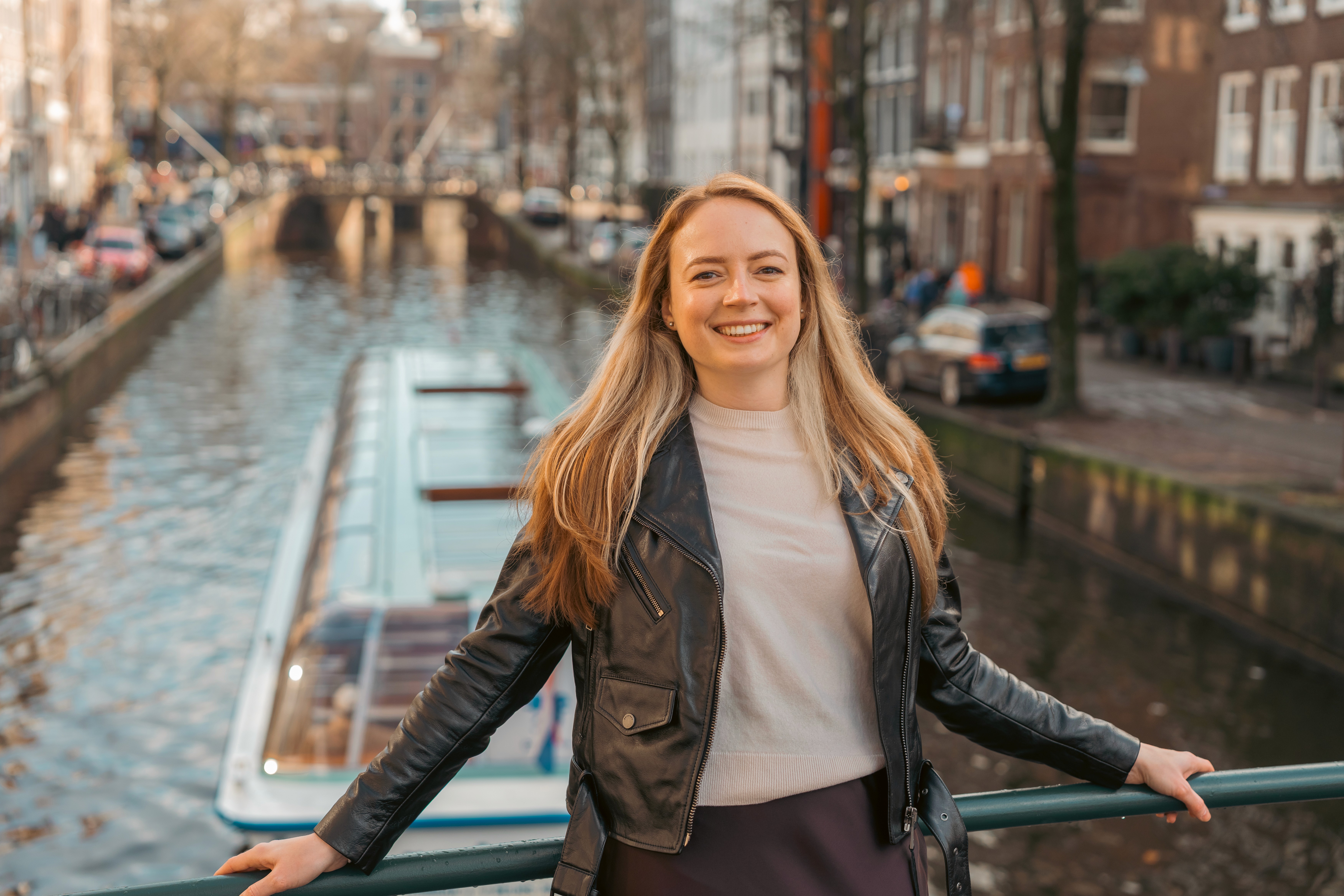
When Russia’s full-scale invasion began in 2022, Bogdana Postrygan had only recently moved to Zaandam. She had a new home, boxes still waiting to be unpacked, and no idea that within weeks her home would become a collection point for humanitarian aid — or that she would soon help build a Ukrainian community space that would grow far beyond its original purpose.
Today, Bogdana is the head of the Oekraïense Club in Zaandam. She is also developing her own initiative, Postrygan Studio, supporting Ukrainian community leaders in the Netherlands.
We spoke with Bogdana about how the Oekraïense Club came to life, what she learned through the Civil Society HUB, and why she believes community initiatives need to move from endless volunteering towards sustainable, professional work.
From boxes of humanitarian aid to Oekraïense Club
Let’s start at the beginning. How did the Oekraïense Club in Zaandam come about?
Bogdana: I had just moved to Zaandam with my husband. We had lived in Amsterdam during the pandemic and had only recently bought a house in Zaandam.
We had barely unpacked our boxes when the full-scale invasion started.
I wanted to help. At that time, Ukrainians in the Netherlands were collecting humanitarian aid, and people could offer their home addresses as collection points. Soon, boxes of donations were arriving at our house — literally up to the ceiling.
Then my relatives and friends from Ukraine arrived, so our house was full of people as well.
I started looking for a place where we could store humanitarian aid. I contacted everyone I knew locally, but people told me there simply wasn’t any space available.
Then, while walking my dog, I started talking to my neighbour, who was a pastor. He asked how he could help. I told him I needed a garage.
He said, “I don’t have a garage, but I can give you a space for two hours a week.”
And that’s how it started.
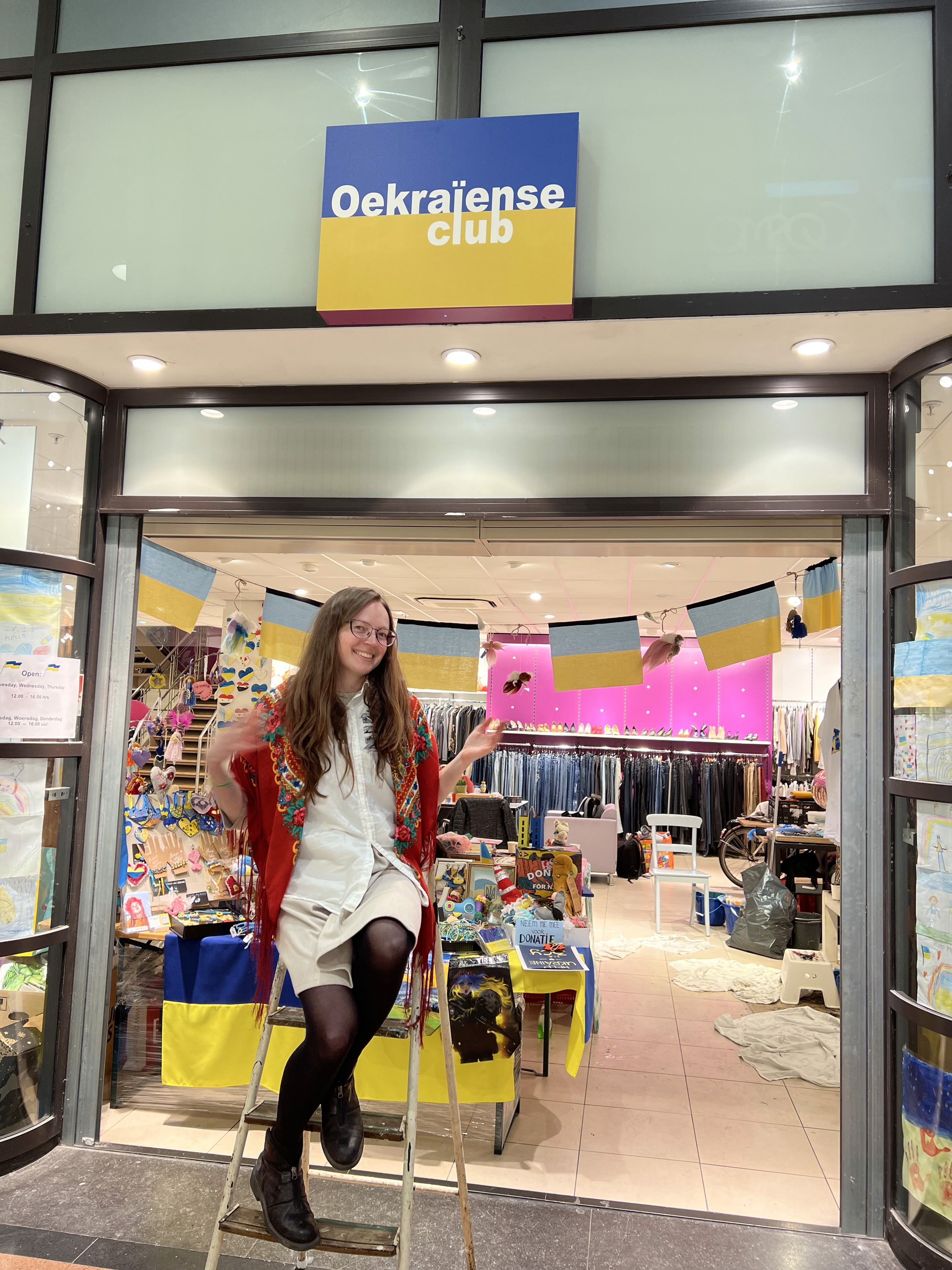
At first, we were gathering for two hours every Saturday. The place the Club is now at was a humanitarian aid point mainly with clothes for Ukrainians in need. Later we moved to that space realising that when clothes stopped being a necessity, the space could offer more to the community. Different generations of Ukrainians were arriving and living together, and everyone had different needs. Older people missed being around people their own age. Children were also struggling to find their place.
The Club became a place where people could simply come together.

When a humanitarian store became a cultural space
So how did those two hours a week turn into the Oekraïense Club?
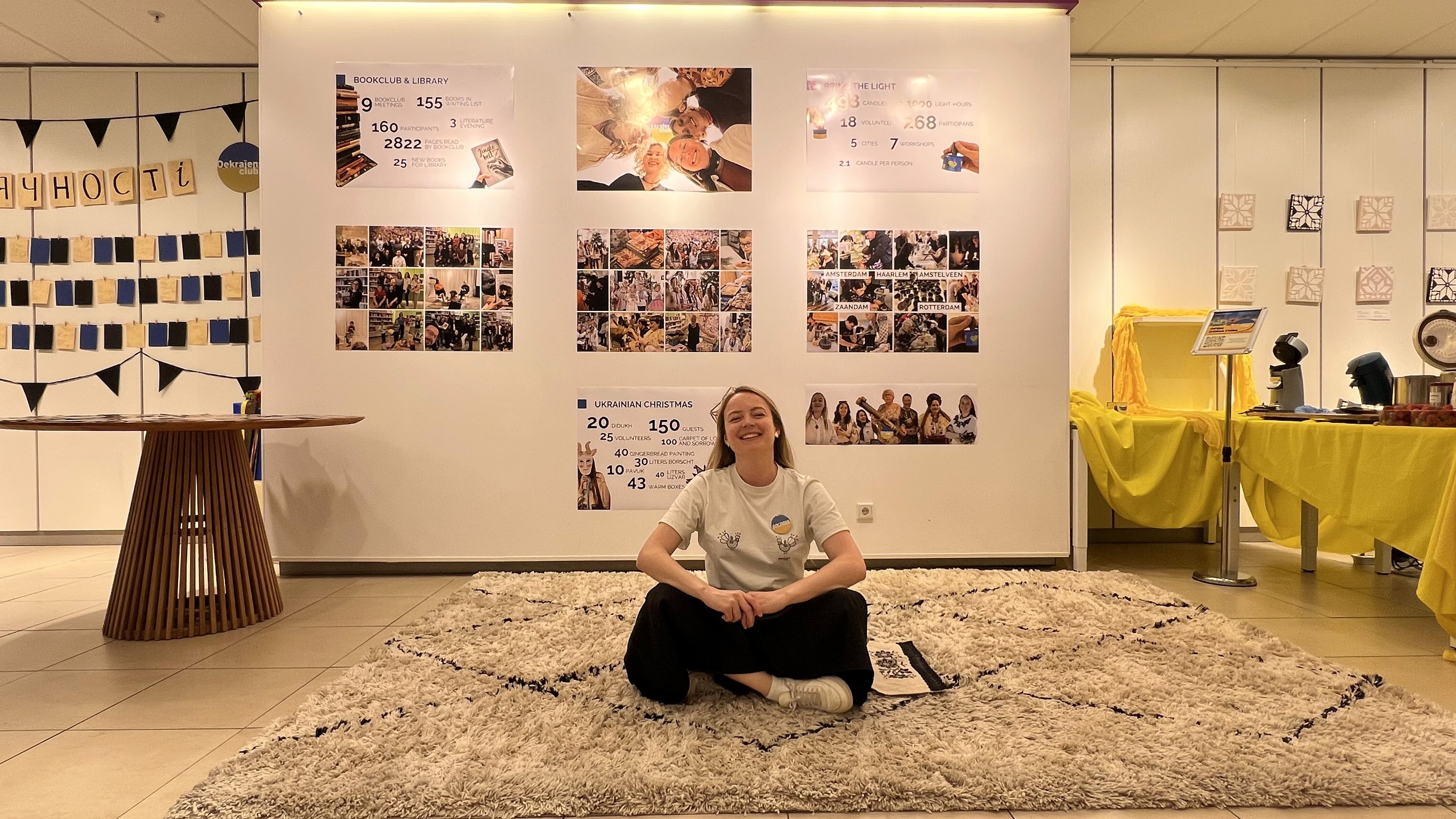
Bogdana: We started having Dutch and English classes, workshops, lectures and activities for children. At one point, everything was happening in the same room at the same time. Teachers were trying to teach while children were making posters and other activities were going on around them.
It was chaotic — but it was also a sign that something was changing.
Fewer people were coming for clothes, while more people were looking for language courses, workshops, lectures and opportunities to connect. People had started to meet their basic needs. Now they needed something else: integration, community and a sense of belonging.
So, little by little, the humanitarian store became a cultural space. That’s how the Oekraïense Club grew.
Interestingly, I never planned to create an Oekraïense Club. The name actually came from a poster I had to make overnight.
The pastor told me that if we were going to use the space, we needed a poster so the neighbours would know what was happening there. I thought, “Ukrainian House” didn’t make sense because we were only there for two hours a week. So I called it the Ukrainian Club - Oekraïense Club.
And it just stayed. There is a saying: nothing is more permanent than something temporary.
Learning to stop knocking on the same door
How did the Civil Society HUB influence you as a leader?
Bogdana: One of the most important things I learned was that you have to diversify your risks and look for different ways forward.
If one door is closed, you shouldn’t spend all your energy knocking on that same door. You need to look around and find another way. The program helped me think more creatively and more broadly.
It also gave me a lot of information that I could actually use. For example, I learned more about how different levels of government work in the Netherlands and started approaching institutions more constructively.
We still haven’t solved all our problems, but my approach has changed.
Instead of thinking, “How do I make this one thing work?”, I started asking, “What other options do we have?”.
From volunteering 24/7 to building sustainable work
You also started thinking differently about your own role. What changed?
Bogdana: For me, the Oekraïense Club is still volunteering. But it takes a huge amount of time. Even if I’m not physically at the Club, I still spend time working on it remotely from home. It can feel like a 24/7 responsibility.
I want to keep doing it. But if I want to do this for another two or three years — or longer — I have to treat it as a marathon. It needs to become social work, not just volunteering. Because otherwise, burnout is already knocking on the door. And I think this is important not only for me, but for other volunteers too. If someone volunteers two or three hours a week, that’s volunteering. But if someone works two, three or four hours every day, that is already work. We need to recognise that.
I realised that my experience has value - this was also an important realisation for me personally.
People started coming to me and asking, “Could you do this for me?” or “Could you organise this?” Sometimes they would offer to donate to the Oekraïense Club instead of paying for my work.
But I realised that my experience also has value.
If someone wants to use my professional skills, that can be professional work. It doesn’t have to become another unpaid task simply because I am also a volunteer. The Civil Society HUB helped me reconnect with that sense of self-worth. I realised: I am valuable, and my experience is valuable. And if I want to keep helping others, I also need to build something stable for myself.
A new initiative: Postrygan Studio
This thinking also led you to create your own initiative, Postrygan Studio. What is it about?
Bogdana: During the program, I realised that I have my own expertise and experience that I can share professionally. I wanted to create something where I could use that experience to support other people.
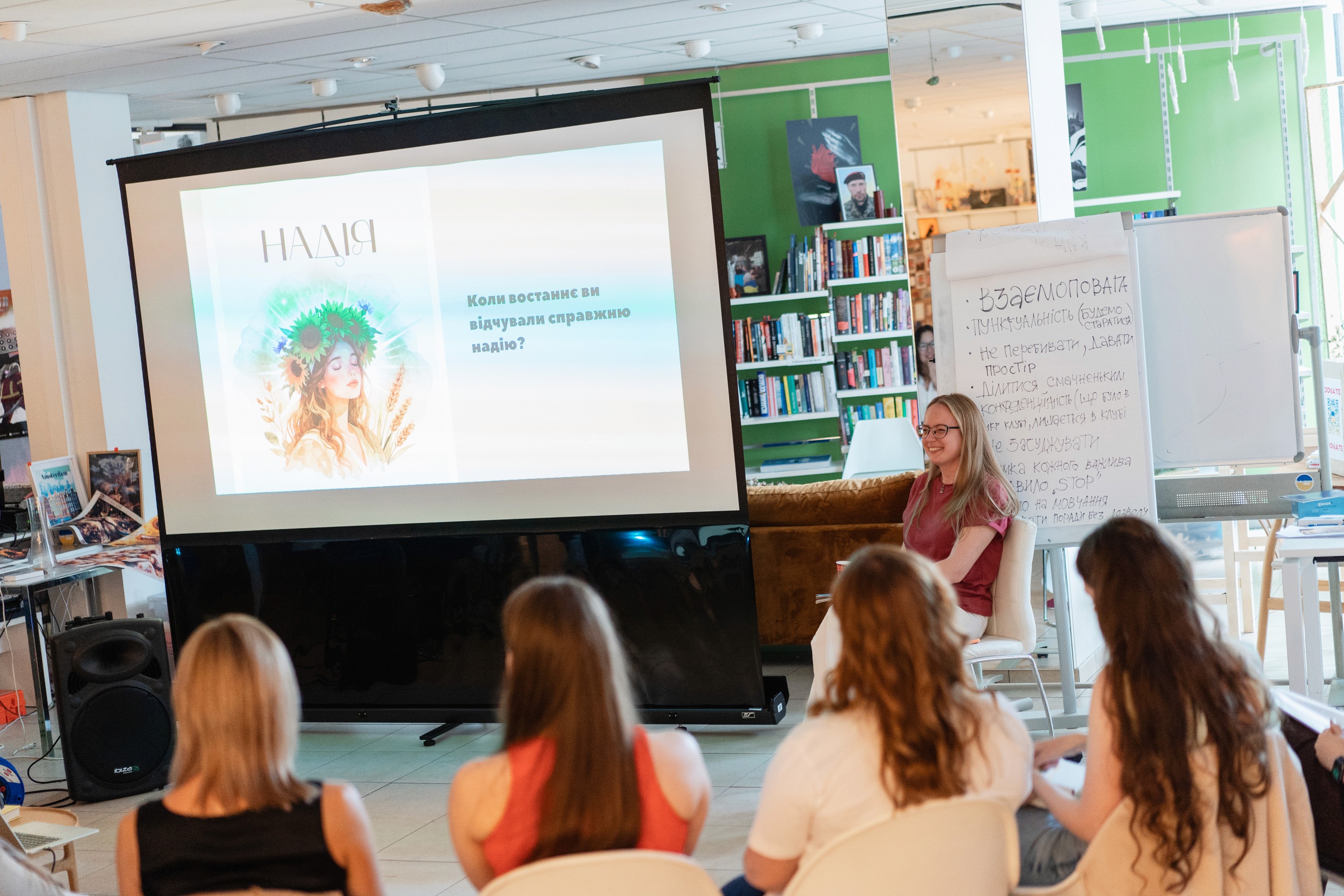
I started with a course for Ukrainian women in the Netherlands — many of them leaders of initiatives, hubs or communities.
And something surprised me.
I expected that perhaps women who felt lost or inactive would join. Instead, many of the participants were already incredibly active and successful. They had demanding jobs, their own initiatives and strong leadership experience. But many of them were also exhausted. Sometimes they felt that they weren’t doing enough, even though they had already achieved so much.
So I wanted to remind them: you already have what you need. You are strong. You have already done a lot.
I also wanted to create a circle of women who could support each other and continue sharing experience beyond the course.
The importance of being understood
What was the most valuable part of the Civil Society HUB for you?
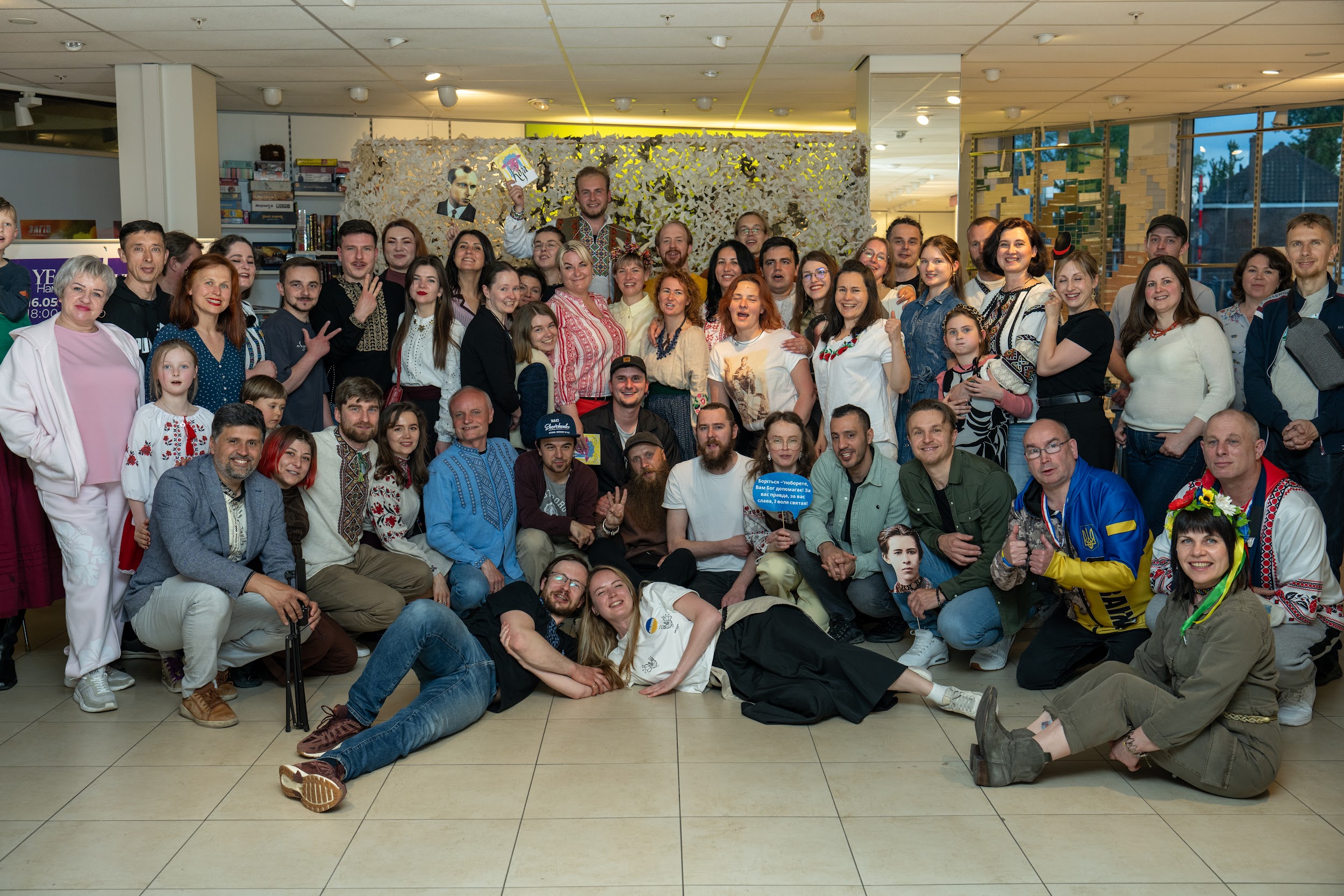
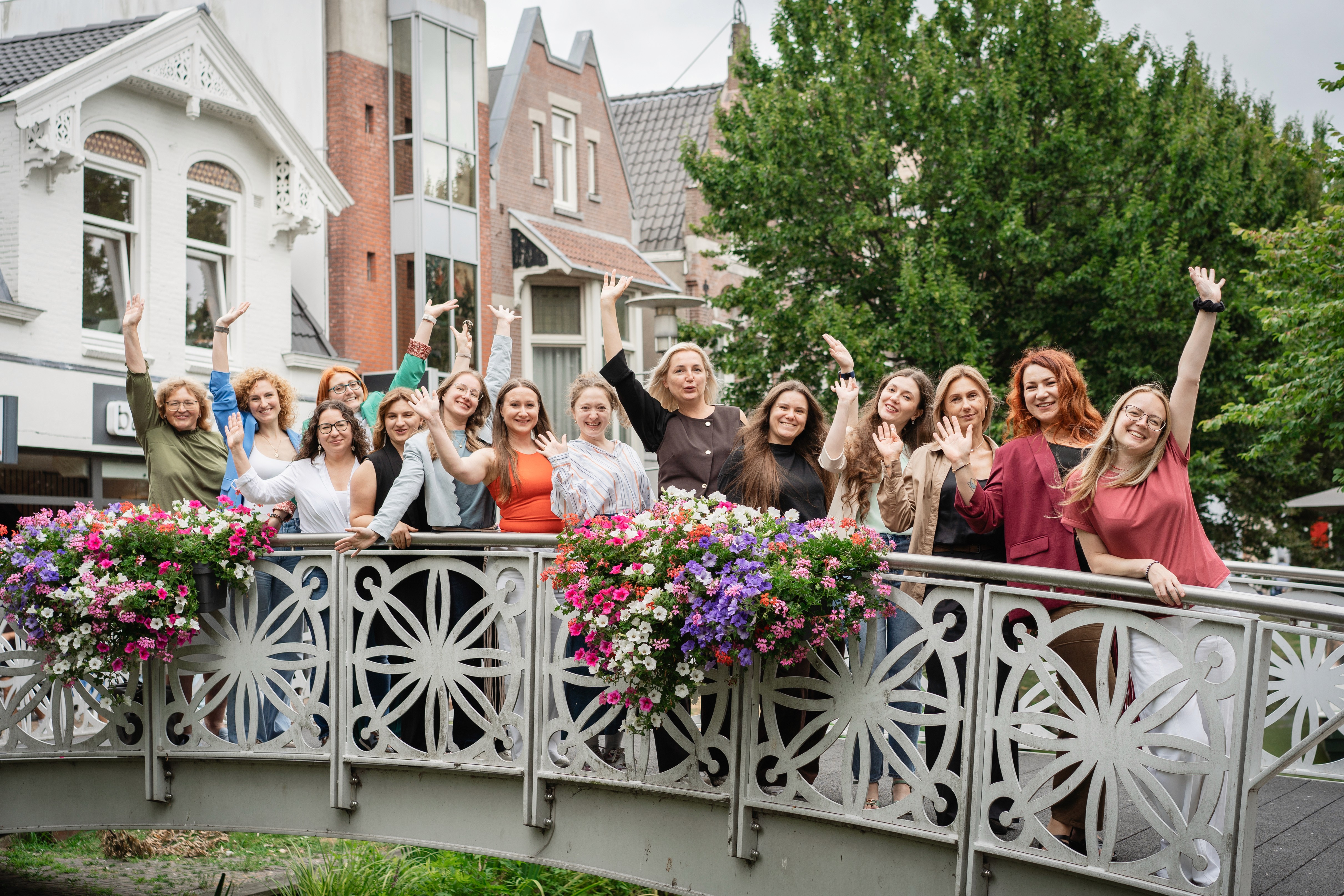
Bogdana: It wasn’t just the knowledge. It was being surrounded by people who were going through similar experiences. We had organisations of very different sizes. Some people were just starting their organisations, while others had been running them for years. We could learn from each other.
There was one moment that was particularly important for me.
During a session, we were talking about different roles that leaders have. One of the participants mentioned a role that I had been struggling to define myself: the role of a public figure. I had never thought of myself that way. But suddenly, it explained a lot.
As leaders, we can become public figures without ever choosing that role. And that can affect our personal boundaries. Simply hearing someone name that experience helped me understand what I was going through and made it easier to set boundaries.
It saved me a lot of energy.
And that is something I think is very important about programs like this: sometimes you just need someone to say, “I understand. I have been through something similar.”
Seeing the Ukrainian community as part of Dutch society
What do you think Ukrainian community initiatives in the Netherlands need most right now?
Bogdana: I think one of the biggest challenges is that Ukrainians are still often seen primarily as refugees — as something temporary. But we are already part of Dutch society. The Oekraïense Club is called a Ukrainian Club, but Dutch people come there too. We are located in the centre of the city and we also support local residents. Dutch initiatives regularly approach us because they want to organise activities in our space. They see it as a welcoming cultural place. But we often don’t have the resources or staff to collaborate with them. We could be much more connected to Dutch society, but we need to be seen as a real part of it and not simply as a temporary group that needs support.
And I think we need to become better at clearly saying what we need.
For example: we need funding. We need people who can work at the Club.
That is something I also learned through the Civil Society HUB — it is important to clearly communicate your needs.
What comes next?
How do you see the future of the Oekraïense Club?
Bogdana: I would love to see it grow into a cultural centre that exists for many years. And I want it to become bigger than any one person — including me. Even if I eventually leave, or someone else takes over, the structure should remain.
I believe that Ukrainian communities will continue to be part of Dutch society for generations. So I would like us to build something of our own that belongs to the Ukrainian community and is not completely dependent on political structures or whether a particular subsidy is available. I would also like to continue working with the Oekraïense Club, but in a more sustainable and professional way. I don’t want to keep choosing between helping others, taking care of my family and earning money. I want to build something where these things can coexist.
The course helped me calm down
If you hadn’t joined the Civil Society HUB, what do you think would be different today?
Bogdana: I would definitely be spending much more energy worrying. There were sessions where I thought, “But we already do all of this!” Yet afterwards, I realised something had changed.
I became calmer.
Before the program, I often felt that perhaps we were doing something wrong, or that we needed to find another course or another method to learn how to do things “properly”. Then I realised that what we were experiencing was normal. Organisations go through periods of chaos, restructuring and uncertainty. Other organisations — including the ones led by the people around me in the programme — were experiencing similar things.
And suddenly I thought: Okay. We’re doing fine.
That gave me back energy. Instead of spending it worrying about whether we were doing everything correctly, I could use it to work on the things that actually needed attention.

One final message
What would you say to someone considering joining the Civil Society HUB?
Bogdana: It’s not just education. It is also about communication with other leaders. Over six months, we created a really valuable network. We didn’t necessarily become best friends, but we learned from each other, inspired each other and understood each other. And that matters. Because sometimes the most important thing is not the knowledge you receive, but the experience of going through something together.
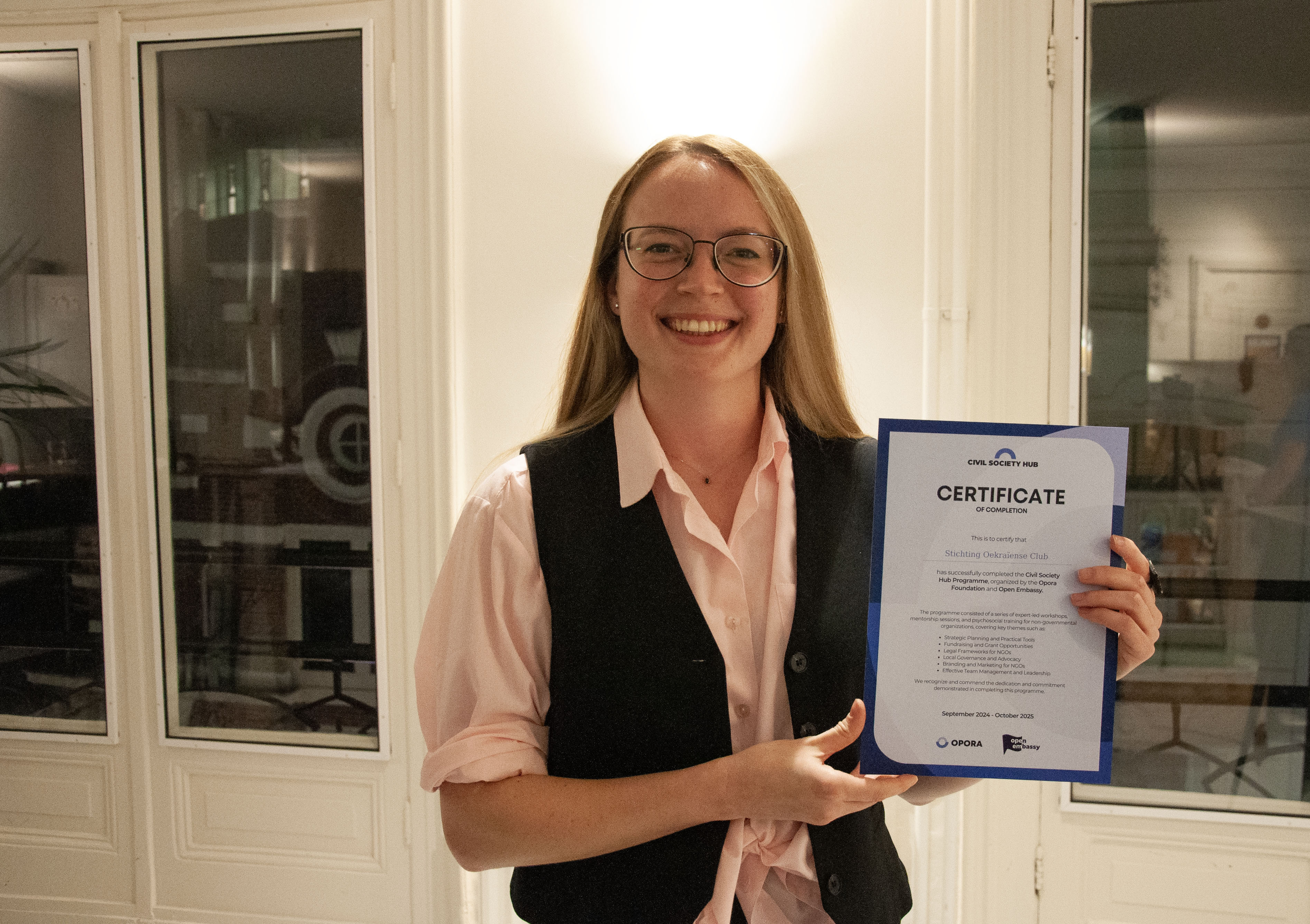
For me, the Civil Society HUB was also about understanding my own value. It reminded me that my experience matters, my work matters, and I need to value myself if I want to continue moving forward. Because building a strong community also means building sustainable leaders.
All photos courtesy of Bogdana Postrygan and Oekraïense Club Zaandam.
When Russia’s full-scale invasion began in 2022, Bogdana Postrygan had only recently moved to Zaandam. She had a new home, boxes still waiting to be unpacked, and no idea that within weeks her home would become a collection point for humanitarian aid — or that she would soon help build a Ukrainian community space that would grow far beyond its original purpose.
Today, Bogdana is the head of the Oekraïense Club in Zaandam. She is also developing her own initiative, Postrygan Studio, supporting Ukrainian community leaders in the Netherlands.
We spoke with Bogdana about how the Oekraïense Club came to life, what she learned through the Civil Society HUB, and why she believes community initiatives need to move from endless volunteering towards sustainable, professional work.
From boxes of humanitarian aid to Oekraïense Club
Let’s start at the beginning. How did the Oekraïense Club in Zaandam come about?
Bogdana: I had just moved to Zaandam with my husband. We had lived in Amsterdam during the pandemic and had only recently bought a house in Zaandam.
We had barely unpacked our boxes when the full-scale invasion started.
I wanted to help. At that time, Ukrainians in the Netherlands were collecting humanitarian aid, and people could offer their home addresses as collection points. Soon, boxes of donations were arriving at our house — literally up to the ceiling.
Then my relatives and friends from Ukraine arrived, so our house was full of people as well.
I started looking for a place where we could store humanitarian aid. I contacted everyone I knew locally, but people told me there simply wasn’t any space available.
Then, while walking my dog, I started talking to my neighbour, who was a pastor. He asked how he could help. I told him I needed a garage.
He said, “I don’t have a garage, but I can give you a space for two hours a week.”
And that’s how it started.
At first, we were gathering for two hours every Saturday. The place the Club is now at was a humanitarian aid point mainly with clothes for Ukrainians in need. Later we moved to that space realising that when clothes stopped being a necessity, the space could offer more to the community. Different generations of Ukrainians were arriving and living together, and everyone had different needs. Older people missed being around people their own age. Children were also struggling to find their place.
The Club became a place where people could simply come together.
When a humanitarian store became a cultural space
So how did those two hours a week turn into the Oekraïense Club?
Bogdana: We started having Dutch and English classes, workshops, lectures and activities for children. At one point, everything was happening in the same room at the same time. Teachers were trying to teach while children were making posters and other activities were going on around them.
It was chaotic — but it was also a sign that something was changing.
Fewer people were coming for clothes, while more people were looking for language courses, workshops, lectures and opportunities to connect. People had started to meet their basic needs. Now they needed something else: integration, community and a sense of belonging.
So, little by little, the humanitarian store became a cultural space. That’s how the Oekraïense Club grew.
Interestingly, I never planned to create an Oekraïense Club. The name actually came from a poster I had to make overnight.
The pastor told me that if we were going to use the space, we needed a poster so the neighbours would know what was happening there. I thought, “Ukrainian House” didn’t make sense because we were only there for two hours a week. So I called it the Ukrainian Club - Oekraïense Club.
And it just stayed. There is a saying: nothing is more permanent than something temporary.
Learning to stop knocking on the same door
How did the Civil Society HUB influence you as a leader?
Bogdana: One of the most important things I learned was that you have to diversify your risks and look for different ways forward.
If one door is closed, you shouldn’t spend all your energy knocking on that same door. You need to look around and find another way. The program helped me think more creatively and more broadly.
It also gave me a lot of information that I could actually use. For example, I learned more about how different levels of government work in the Netherlands and started approaching institutions more constructively.
We still haven’t solved all our problems, but my approach has changed.
Instead of thinking, “How do I make this one thing work?”, I started asking, “What other options do we have?”.
From volunteering 24/7 to building sustainable work
You also started thinking differently about your own role. What changed?
Bogdana: For me, the Oekraïense Club is still volunteering. But it takes a huge amount of time. Even if I’m not physically at the Club, I still spend time working on it remotely from home. It can feel like a 24/7 responsibility.
I want to keep doing it. But if I want to do this for another two or three years — or longer — I have to treat it as a marathon. It needs to become social work, not just volunteering. Because otherwise, burnout is already knocking on the door. And I think this is important not only for me, but for other volunteers too. If someone volunteers two or three hours a week, that’s volunteering. But if someone works two, three or four hours every day, that is already work. We need to recognise that.
I realised that my experience has value - this was also an important realisation for me personally.
People started coming to me and asking, “Could you do this for me?” or “Could you organise this?” Sometimes they would offer to donate to the Oekraïense Club instead of paying for my work.
But I realised that my experience also has value.
If someone wants to use my professional skills, that can be professional work. It doesn’t have to become another unpaid task simply because I am also a volunteer. The Civil Society HUB helped me reconnect with that sense of self-worth. I realised: I am valuable, and my experience is valuable. And if I want to keep helping others, I also need to build something stable for myself.
A new initiative: Postrygan Studio
This thinking also led you to create your own initiative, Postrygan Studio. What is it about?
Bogdana: During the program, I realised that I have my own expertise and experience that I can share professionally. I wanted to create something where I could use that experience to support other people.
I started with a course for Ukrainian women in the Netherlands — many of them leaders of initiatives, hubs or communities.
And something surprised me.
I expected that perhaps women who felt lost or inactive would join. Instead, many of the participants were already incredibly active and successful. They had demanding jobs, their own initiatives and strong leadership experience. But many of them were also exhausted. Sometimes they felt that they weren’t doing enough, even though they had already achieved so much.
So I wanted to remind them: you already have what you need. You are strong. You have already done a lot.
I also wanted to create a circle of women who could support each other and continue sharing experience beyond the course.
The importance of being understood
What was the most valuable part of the Civil Society HUB for you?
Bogdana: It wasn’t just the knowledge. It was being surrounded by people who were going through similar experiences. We had organisations of very different sizes. Some people were just starting their organisations, while others had been running them for years. We could learn from each other.
There was one moment that was particularly important for me.
During a session, we were talking about different roles that leaders have. One of the participants mentioned a role that I had been struggling to define myself: the role of a public figure. I had never thought of myself that way. But suddenly, it explained a lot.
As leaders, we can become public figures without ever choosing that role. And that can affect our personal boundaries. Simply hearing someone name that experience helped me understand what I was going through and made it easier to set boundaries.
It saved me a lot of energy.
And that is something I think is very important about programs like this: sometimes you just need someone to say, “I understand. I have been through something similar.”
Seeing the Ukrainian community as part of Dutch society
What do you think Ukrainian community initiatives in the Netherlands need most right now?
Bogdana: I think one of the biggest challenges is that Ukrainians are still often seen primarily as refugees — as something temporary. But we are already part of Dutch society. The Oekraïense Club is called a Ukrainian Club, but Dutch people come there too. We are located in the centre of the city and we also support local residents. Dutch initiatives regularly approach us because they want to organise activities in our space. They see it as a welcoming cultural place. But we often don’t have the resources or staff to collaborate with them. We could be much more connected to Dutch society, but we need to be seen as a real part of it and not simply as a temporary group that needs support.
And I think we need to become better at clearly saying what we need.
For example: we need funding. We need people who can work at the Club.
That is something I also learned through the Civil Society HUB — it is important to clearly communicate your needs.
What comes next?
How do you see the future of the Oekraïense Club?
Bogdana: I would love to see it grow into a cultural centre that exists for many years. And I want it to become bigger than any one person — including me. Even if I eventually leave, or someone else takes over, the structure should remain.
I believe that Ukrainian communities will continue to be part of Dutch society for generations. So I would like us to build something of our own that belongs to the Ukrainian community and is not completely dependent on political structures or whether a particular subsidy is available. I would also like to continue working with the Oekraïense Club, but in a more sustainable and professional way. I don’t want to keep choosing between helping others, taking care of my family and earning money. I want to build something where these things can coexist.
The course helped me calm down
If you hadn’t joined the Civil Society HUB, what do you think would be different today?
Bogdana: I would definitely be spending much more energy worrying. There were sessions where I thought, “But we already do all of this!” Yet afterwards, I realised something had changed.
I became calmer.
Before the program, I often felt that perhaps we were doing something wrong, or that we needed to find another course or another method to learn how to do things “properly”. Then I realised that what we were experiencing was normal. Organisations go through periods of chaos, restructuring and uncertainty. Other organisations — including the ones led by the people around me in the programme — were experiencing similar things.
And suddenly I thought: Okay. We’re doing fine.
That gave me back energy. Instead of spending it worrying about whether we were doing everything correctly, I could use it to work on the things that actually needed attention.
One final message
What would you say to someone considering joining the Civil Society HUB?
Bogdana: It’s not just education. It is also about communication with other leaders. Over six months, we created a really valuable network. We didn’t necessarily become best friends, but we learned from each other, inspired each other and understood each other. And that matters. Because sometimes the most important thing is not the knowledge you receive, but the experience of going through something together.
For me, the Civil Society HUB was also about understanding my own value. It reminded me that my experience matters, my work matters, and I need to value myself if I want to continue moving forward. Because building a strong community also means building sustainable leaders.
All photos courtesy of Bogdana Postrygan and Oekraïense Club Zaandam.
When Russia’s full-scale invasion began in 2022, Bogdana Postrygan had only recently moved to Zaandam. She had a new home, boxes still waiting to be unpacked, and no idea that within weeks her home would become a collection point for humanitarian aid — or that she would soon help build a Ukrainian community space that would grow far beyond its original purpose.
Today, Bogdana is the head of the Oekraïense Club in Zaandam. She is also developing her own initiative, Postrygan Studio, supporting Ukrainian community leaders in the Netherlands.
We spoke with Bogdana about how the Oekraïense Club came to life, what she learned through the Civil Society HUB, and why she believes community initiatives need to move from endless volunteering towards sustainable, professional work.
From boxes of humanitarian aid to Oekraïense Club
Let’s start at the beginning. How did the Oekraïense Club in Zaandam come about?
Bogdana: I had just moved to Zaandam with my husband. We had lived in Amsterdam during the pandemic and had only recently bought a house in Zaandam.
We had barely unpacked our boxes when the full-scale invasion started.
I wanted to help. At that time, Ukrainians in the Netherlands were collecting humanitarian aid, and people could offer their home addresses as collection points. Soon, boxes of donations were arriving at our house — literally up to the ceiling.
Then my relatives and friends from Ukraine arrived, so our house was full of people as well.
I started looking for a place where we could store humanitarian aid. I contacted everyone I knew locally, but people told me there simply wasn’t any space available.
Then, while walking my dog, I started talking to my neighbour, who was a pastor. He asked how he could help. I told him I needed a garage.
He said, “I don’t have a garage, but I can give you a space for two hours a week.”
And that’s how it started.
At first, we were gathering for two hours every Saturday. The place the Club is now at was a humanitarian aid point mainly with clothes for Ukrainians in need. Later we moved to that space realising that when clothes stopped being a necessity, the space could offer more to the community. Different generations of Ukrainians were arriving and living together, and everyone had different needs. Older people missed being around people their own age. Children were also struggling to find their place.
The Club became a place where people could simply come together.
When a humanitarian store became a cultural space
So how did those two hours a week turn into the Oekraïense Club?
Bogdana: We started having Dutch and English classes, workshops, lectures and activities for children. At one point, everything was happening in the same room at the same time. Teachers were trying to teach while children were making posters and other activities were going on around them.
It was chaotic — but it was also a sign that something was changing.
Fewer people were coming for clothes, while more people were looking for language courses, workshops, lectures and opportunities to connect. People had started to meet their basic needs. Now they needed something else: integration, community and a sense of belonging.
So, little by little, the humanitarian store became a cultural space. That’s how the Oekraïense Club grew.
Interestingly, I never planned to create an Oekraïense Club. The name actually came from a poster I had to make overnight.
The pastor told me that if we were going to use the space, we needed a poster so the neighbours would know what was happening there. I thought, “Ukrainian House” didn’t make sense because we were only there for two hours a week. So I called it the Ukrainian Club - Oekraïense Club.
And it just stayed. There is a saying: nothing is more permanent than something temporary.
Learning to stop knocking on the same door
How did the Civil Society HUB influence you as a leader?
Bogdana: One of the most important things I learned was that you have to diversify your risks and look for different ways forward.
If one door is closed, you shouldn’t spend all your energy knocking on that same door. You need to look around and find another way. The program helped me think more creatively and more broadly.
It also gave me a lot of information that I could actually use. For example, I learned more about how different levels of government work in the Netherlands and started approaching institutions more constructively.
We still haven’t solved all our problems, but my approach has changed.
Instead of thinking, “How do I make this one thing work?”, I started asking, “What other options do we have?”.
From volunteering 24/7 to building sustainable work
You also started thinking differently about your own role. What changed?
Bogdana: For me, the Oekraïense Club is still volunteering. But it takes a huge amount of time. Even if I’m not physically at the Club, I still spend time working on it remotely from home. It can feel like a 24/7 responsibility.
I want to keep doing it. But if I want to do this for another two or three years — or longer — I have to treat it as a marathon. It needs to become social work, not just volunteering. Because otherwise, burnout is already knocking on the door. And I think this is important not only for me, but for other volunteers too. If someone volunteers two or three hours a week, that’s volunteering. But if someone works two, three or four hours every day, that is already work. We need to recognise that.
I realised that my experience has value - this was also an important realisation for me personally.
People started coming to me and asking, “Could you do this for me?” or “Could you organise this?” Sometimes they would offer to donate to the Oekraïense Club instead of paying for my work.
But I realised that my experience also has value.
If someone wants to use my professional skills, that can be professional work. It doesn’t have to become another unpaid task simply because I am also a volunteer. The Civil Society HUB helped me reconnect with that sense of self-worth. I realised: I am valuable, and my experience is valuable. And if I want to keep helping others, I also need to build something stable for myself.
A new initiative: Postrygan Studio
This thinking also led you to create your own initiative, Postrygan Studio. What is it about?
Bogdana: During the program, I realised that I have my own expertise and experience that I can share professionally. I wanted to create something where I could use that experience to support other people.
I started with a course for Ukrainian women in the Netherlands — many of them leaders of initiatives, hubs or communities.
And something surprised me.
I expected that perhaps women who felt lost or inactive would join. Instead, many of the participants were already incredibly active and successful. They had demanding jobs, their own initiatives and strong leadership experience. But many of them were also exhausted. Sometimes they felt that they weren’t doing enough, even though they had already achieved so much.
So I wanted to remind them: you already have what you need. You are strong. You have already done a lot.
I also wanted to create a circle of women who could support each other and continue sharing experience beyond the course.
The importance of being understood
What was the most valuable part of the Civil Society HUB for you?
Bogdana: It wasn’t just the knowledge. It was being surrounded by people who were going through similar experiences. We had organisations of very different sizes. Some people were just starting their organisations, while others had been running them for years. We could learn from each other.
There was one moment that was particularly important for me.
During a session, we were talking about different roles that leaders have. One of the participants mentioned a role that I had been struggling to define myself: the role of a public figure. I had never thought of myself that way. But suddenly, it explained a lot.
As leaders, we can become public figures without ever choosing that role. And that can affect our personal boundaries. Simply hearing someone name that experience helped me understand what I was going through and made it easier to set boundaries.
It saved me a lot of energy.
And that is something I think is very important about programs like this: sometimes you just need someone to say, “I understand. I have been through something similar.”
Seeing the Ukrainian community as part of Dutch society
What do you think Ukrainian community initiatives in the Netherlands need most right now?
Bogdana: I think one of the biggest challenges is that Ukrainians are still often seen primarily as refugees — as something temporary. But we are already part of Dutch society. The Oekraïense Club is called a Ukrainian Club, but Dutch people come there too. We are located in the centre of the city and we also support local residents. Dutch initiatives regularly approach us because they want to organise activities in our space. They see it as a welcoming cultural place. But we often don’t have the resources or staff to collaborate with them. We could be much more connected to Dutch society, but we need to be seen as a real part of it and not simply as a temporary group that needs support.
And I think we need to become better at clearly saying what we need.
For example: we need funding. We need people who can work at the Club.
That is something I also learned through the Civil Society HUB — it is important to clearly communicate your needs.
What comes next?
How do you see the future of the Oekraïense Club?
Bogdana: I would love to see it grow into a cultural centre that exists for many years. And I want it to become bigger than any one person — including me. Even if I eventually leave, or someone else takes over, the structure should remain.
I believe that Ukrainian communities will continue to be part of Dutch society for generations. So I would like us to build something of our own that belongs to the Ukrainian community and is not completely dependent on political structures or whether a particular subsidy is available. I would also like to continue working with the Oekraïense Club, but in a more sustainable and professional way. I don’t want to keep choosing between helping others, taking care of my family and earning money. I want to build something where these things can coexist.
The course helped me calm down
If you hadn’t joined the Civil Society HUB, what do you think would be different today?
Bogdana: I would definitely be spending much more energy worrying. There were sessions where I thought, “But we already do all of this!” Yet afterwards, I realised something had changed.
I became calmer.
Before the program, I often felt that perhaps we were doing something wrong, or that we needed to find another course or another method to learn how to do things “properly”. Then I realised that what we were experiencing was normal. Organisations go through periods of chaos, restructuring and uncertainty. Other organisations — including the ones led by the people around me in the programme — were experiencing similar things.
And suddenly I thought: Okay. We’re doing fine.
That gave me back energy. Instead of spending it worrying about whether we were doing everything correctly, I could use it to work on the things that actually needed attention.
One final message
What would you say to someone considering joining the Civil Society HUB?
Bogdana: It’s not just education. It is also about communication with other leaders. Over six months, we created a really valuable network. We didn’t necessarily become best friends, but we learned from each other, inspired each other and understood each other. And that matters. Because sometimes the most important thing is not the knowledge you receive, but the experience of going through something together.
For me, the Civil Society HUB was also about understanding my own value. It reminded me that my experience matters, my work matters, and I need to value myself if I want to continue moving forward. Because building a strong community also means building sustainable leaders.
All photos courtesy of Bogdana Postrygan and Oekraïense Club Zaandam.
Stay informed with
our latest news
Subscribe to receive regular updates on our latest evidence-based research, insights, and policy recommendations.
By clicking Subscribe you're confirming that you agree with our Terms and Conditions.
Stay informed with
our latest news
Subscribe to receive regular updates on our latest evidence-based research, insights, and policy recommendations.
By clicking Subscribe you're confirming that you agree with our Terms and Conditions.
Stay informed with our latest news
Subscribe to receive regular updates on our latest evidence-based research, insights, and policy recommendations.
By clicking Subscribe you're confirming that you agree with our Terms and Conditions.

OPORA
Communication team